This explainer walks through slide 5 of the investor blueprint deck our team uses with prospective cabin owners. The complete, slide-by-slide version is on the blog: Building High-Yield Rental Cabins in the Smoky Mountains: The Investor Blueprint. Every claim below stays inside what the deck itself shows — if a figure is not on these slides, we point you to the post or tool that carries it.
Reviews Decide Occupancy — and Design Decides Reviews
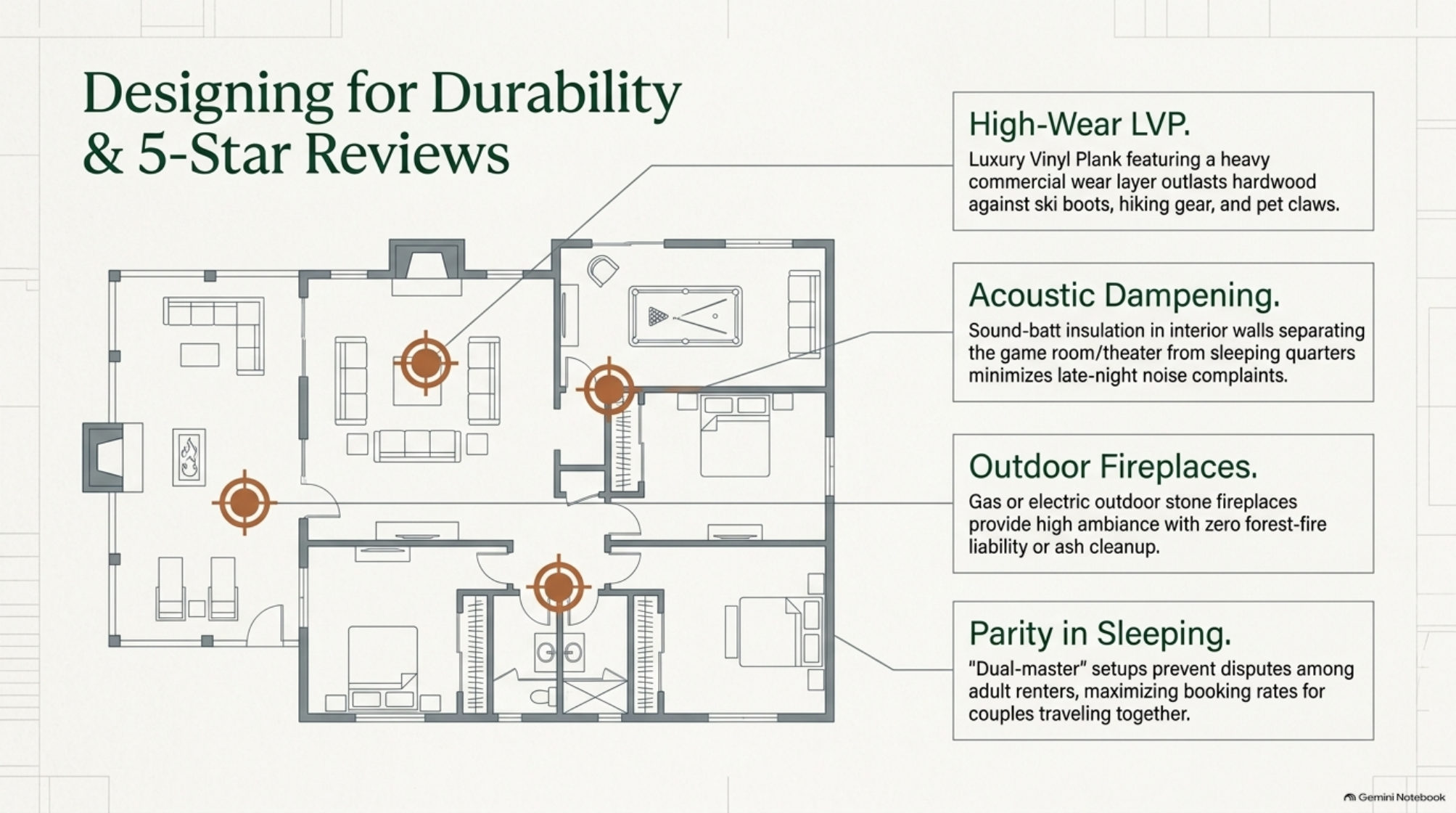
On slide 5, the deck draws a straight line from construction details to your booking calendar: reviews decide occupancy, and these design details decide reviews. A five-star cabin out-books a four-star cabin at the same price point, month after month, because guests filter by score before they filter by price. That makes the finish phase one of the most influential parts of the whole build — and the four details on this slide are the ones our team sees move scores most consistently.
High-Wear Luxury Vinyl Plank Beats Hardwood
The first guest of the season arrives with ski boots. The second brings hiking gear and a muddy dog. Hardwood shows every one of those visits within a year. Luxury vinyl plank with a heavy commercial wear layer is engineered to outlast hardwood against exactly that abuse, which is why the deck leads with it.
In a cabin, the traffic pattern is simple: guests enter through the mudroom or the deck door, drop gear, and spread through the main level. Putting commercial-grade LVP on that whole path — entry, kitchen, great room, and any space the dog owns — means the floors still photograph well in year three. Save hardwood for the areas guests rarely reach in wet boots. The wear layer is the spec that matters: residential-grade vinyl will dent under the same traffic that kills hardwood, so check the commercial wear rating before you approve the finish schedule.
Sound Batt Insulation Between the Game Room and the Bedrooms
Group rentals are where Smoky Mountain cabins make their money, and groups mean late nights. Slide 5 calls out the fix: sound-batt insulation in the interior walls separating the game room or theater from the sleeping quarters.
Without it, the pool table and the surround-sound movie run straight through a shared wall, and the adults trying to sleep at 11 p.m. leave a three-star review about noise. With it, one half of the cabin can party while the other half sleeps, and everybody wakes up happy enough to leave five stars. This is a cheap fix at framing time and an expensive one after drywall — a wall you insulate during the build costs a few hundred dollars in materials, and a noise-complaint-driven renovation costs a whole rental season.
Outdoor Stone Fireplaces With Zero Fire Liability
Guests come to the mountains for fire. The version of fire that works for an STR, per the deck, is the gas or electric outdoor stone fireplace: high ambiance with zero forest-fire liability and no ash cleanup.
Wood-burning fireplaces in rentals carry real operating costs that never show up on the finish schedule: ash cleanup between every stay, smoke smells that linger in fabrics, firewood storage and delivery, and insurance and fire-marshal scrutiny. A stone gas fireplace on the covered deck delivers the gathering point guests photograph and write about, without a single ember leaving the unit. In fire-prone mountain areas, that distinction also keeps you on the right side of local restrictions during dry seasons, when wood fires get banned outright and gas units keep working.
Dual Masters: Parity in Sleeping That Protects Bookings
The deck’s term is “parity in sleeping.” Dual-master setups — two full suites with comparable beds, baths, and privacy — prevent disputes among adult renters, and they are the difference between a cabin that fits couples traveling together and one that quietly loses those bookings.
Think about who actually rents a large Smoky Mountain cabin: two families splitting a weekend, or three couples on a group trip. If the floor plan forces a coin flip over who gets the master, the losing couple books somewhere else next time. When every adult pair has a suite that feels equal, the group keeps returning, and the cabin’s occupancy spreads across the whole year instead of clustering around family-holiday weeks. The same sleeping-floor count that needs dual masters also has to clear Sevier County STR requirements in every bedroom — the compliance explainer for slide 6 covers those rules in detail.
Spend Where the Review Score Earns It
Notice what this slide does not list: granite for granite’s sake, or a third fireplace nobody uses. Every item here pays back through the review score — floors that survive the guests, walls that let groups coexist, a fireplace that delivers the mountain moment safely, and a layout that keeps every adult renter happy. If you are weighing finish options against a fixed budget, prioritize in that order.
When you price these items, remember they land inside the interior-finishing phase of the build. Our companion explainers on the rental market and on STR compliance cover why the demand and the rules make these choices worth getting right, and the 2026 cost post shows where finish-phase dollars actually go.
Frequently Asked Questions
Why not just use hardwood and area rugs in a rental cabin?
Hardwood looks right in a cabin, but STR traffic is brutal: wet boots, pet claws, dragged luggage, and furniture moved for game nights. Luxury vinyl plank with a heavy commercial wear layer is built to outlast hardwood under that use, at a lower installed cost, and it is far easier to replace in one room when a single section eventually wears out.
Do sound-batt interior walls really change review scores?
They prevent the specific complaint that sinks group-rental scores: noise between the game room and the bedrooms. Groups tolerate a lot, but they do not tolerate being woken by the party they are paying to host. Insulated interior walls are a small framing-phase cost that removes the most common one-star trigger in a cabin.
Is a gas fireplace as appealing to guests as a wood one?
For booking photos and ambiance, yes — guests book the stone fireplace and the gathering space around it. The operational difference is what owners feel: no ash, no smoke smell, no firewood logistics, and no forest-fire liability. In fire-restricted seasons the gas unit is the one still allowed to burn.