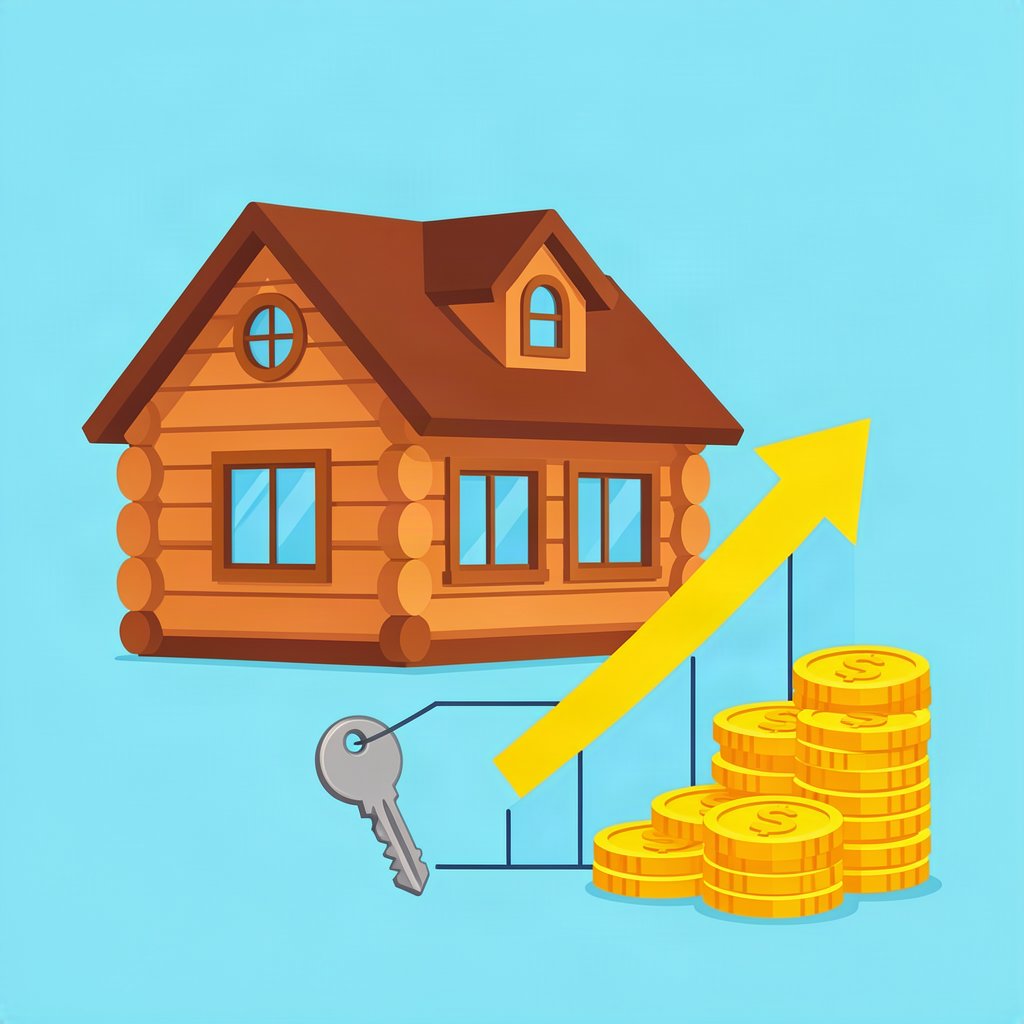
Every high-yield cabin in the Smokies starts with the same thesis, and it is the first thing our team walks through before a single lot gets chosen. This article unpacks slide 1 of the Building High-Yield Rental Cabins in the Smoky Mountains investor deck: what has to be true about the market, about the cabin, and about the land before a short-term rental can reasonably be expected to make money year after year.
The short version fits in three conditions. Demand has to run all year. The cabin has to earn a daily premium over a hotel room. And the asset has to hold value while it earns. When those three line up, a Gatlinburg log home becomes something rare: an income-producing asset that also works as a legacy vacation home for your family.
The rest of the deck — hot tub engineering, guest-pleasing design details, Sevier County compliance, slope logistics, and phasing the budget — exists to protect those three conditions. The market does the heavy lifting. The build is what keeps a strong market from leaking away through bad decks, noise complaints, or failed inspections.
Condition One: Fourteen Million Reasons the Demand Is Constant
Great Smoky Mountains National Park draws 14 million or more visitors a year, and those visitors do not arrive in one season. Spring break families, summer vacation weeks, fall color chasers, and winter holiday groups all keep beds full at different times of the year. For a cabin owner that spread matters more than any single peak: steady demand across the calendar flattens the revenue curve and keeps the property working in the shoulder months when hotel districts go quiet.
Geography concentrates that traffic in a handful of gateway towns. Gatlinburg sits at the park's main entrance, with Pigeon Forge, Sevierville, and Townsend sharing the surrounding corridor, and the cabin inventory around them is what a large share of visitors actually sleep in. An owner in that corridor is renting to the same national park traffic that fills the hotels — with a product the hotels cannot offer.
The practical question for an investor is not whether people will visit. They already do, in record numbers. The question is whether your cabin will be the one they book, which is where the second condition comes in.
Condition Two: The Amenity Premium Guests Pay for a Cabin
Guests in the Smokies are not comparing your cabin to another cabin. They are comparing it to a standard hotel room, and they willingly pay a daily premium for an authentic, highly amenitized log home instead. The cabin itself is the product: real timber, privacy on a mountain lot, a hot tub on a deck with a view, and room for the whole group under one roof.
Two guest profiles drive most bookings, and each one shapes the floor plan. Large multi-family groups want several distinct sleeping areas and gathering spaces big enough for a full week of meals and game nights. Couples traveling together want separate masters so nobody ends up on a sofa bed. The deck's later slides show how seriously builders take these patterns — dual-master layouts and sound-damped walls between the game room and the bedrooms are design decisions, not upgrades.
That premium does not happen by accident. Reviews decide occupancy, and reviews follow experience details. Our short-term rental amenity ROI reserve estimator helps owners decide which upgrades earn their keep before they spend on them, and the full deck walkthrough covers the same ground on hot tub placement, high-wear flooring, and the rest of what turns a nice cabin into a five-star rental.
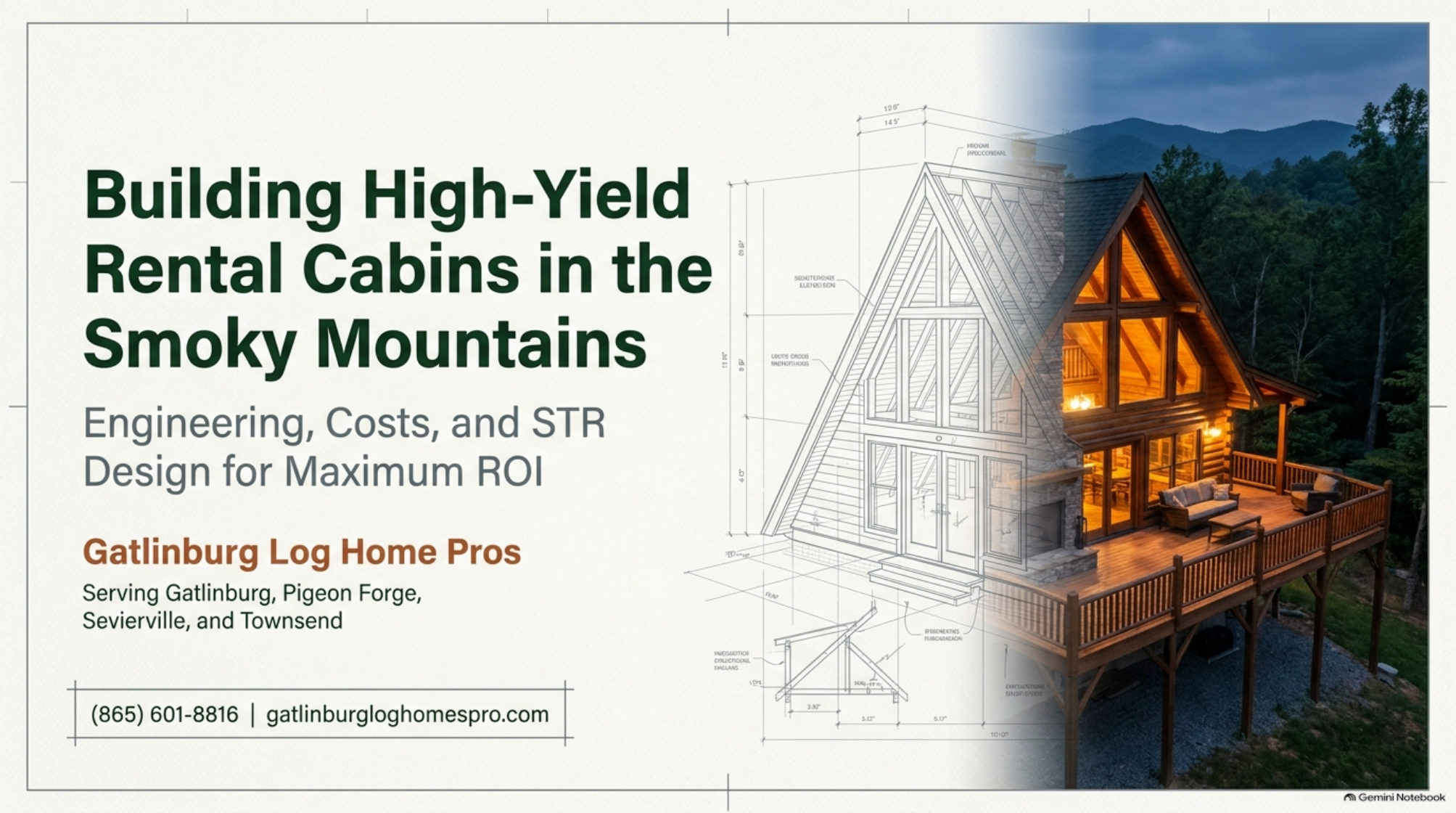
Condition Three: Appreciation on a Constrained Mountain
The third condition is the one most first-time investors forget, because it shows up on a spreadsheet years later instead of on a booking calendar. Sevier County property values have kept moving up because the land itself is scarce. Buildable lots in the mountains are limited, steep slopes cost real money to develop, and local zoning keeps a tight lid on new supply. Fewer buildable cabins means existing cabins keep their pricing power, and owners earn on two tracks at once: rental income while they hold the property, and appreciation when they sell.
That dual-track picture is what makes the asset class interesting to families as well as investors. A cabin that rents well can be used by its owners for holidays and reunions and still pull its weight the rest of the year. Over a decade or two, the same property that covered its own carrying costs can pass to the next generation with the mortgage largely paid down by guests — an income-producing asset that doubles as a legacy vacation home.
Reading the Thesis Before You Buy or Build
Run every candidate property through the three conditions before you commit to a lot, a floor plan, or a builder. A practical way to do it is to score each condition on paper:
- Demand: Is the location, cabin size, and sleeping count matched to what actually books in this market, or are you betting on one season?
- Premium: Do the amenities and the experience justify a nightly rate above the local hotel stock — and can the design protect it once guests arrive?
- Appreciation: Is this one of the limited, buildable, properly zoned properties that holds its value while it earns?
For the revenue side of that scoring, our cabin rental ROI guide walks through the numbers in more detail. For the construction and compliance side — the engineering that keeps a strong market from leaking — read the rest of the blueprint deck walkthrough.
If the thesis holds on paper, the next step is talking to people who build these cabins for a living. Call (865) 601-8816 or tell us about your project and we will match you with pre-vetted Gatlinburg log home professionals.
Frequently Asked Questions
How many people visit the Smoky Mountains each year?
Great Smoky Mountains National Park records 14 million or more annual visitors, and demand spreads across spring break, summer, fall color season, and winter holidays rather than concentrating in a single tourist month.
Why would guests pay more for a cabin than a hotel?
Guests pay a daily premium for the authentic log home experience: real timber construction, private mountain settings, hot tubs, and space for large groups. Hotels compete on convenience; cabins compete on experience, and in the Smokies that experience is what visitors are shopping for.
Can a rental cabin work as both an investment and a family vacation home?
Yes. Owners typically reserve the cabin for their own use during the weeks that matter to them and rent it the rest of the year. The property produces income while it is not in family use, and it still appreciates as a limited-supply mountain asset — which is the legacy angle of the thesis.