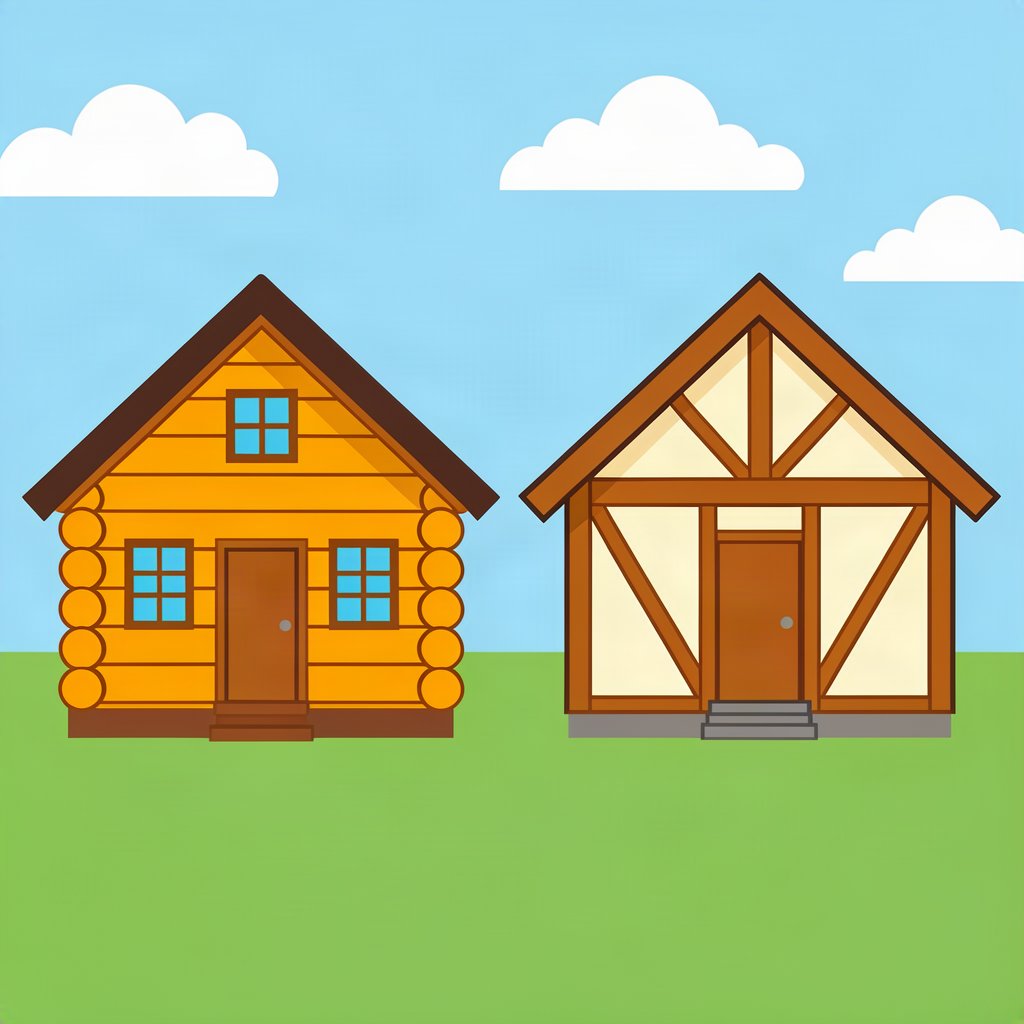
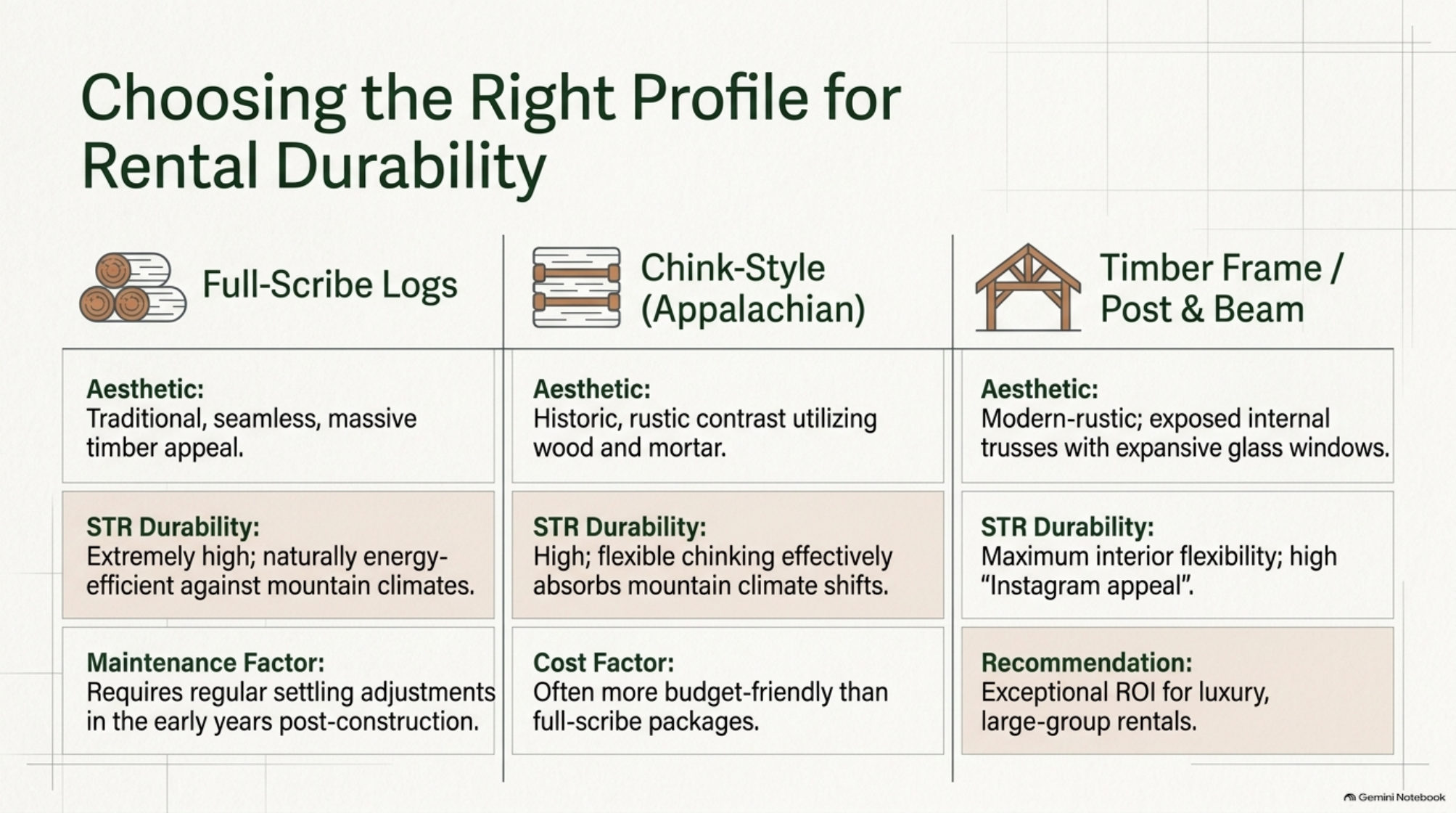
Slide three of our investor blueprint compares the three log profiles that dominate Smoky Mountain rentals: chink-style Appalachian logs, full-scribe handcrafted logs, and timber-frame post-and-beam. Each changes what the cabin looks like, how it behaves while it settles, what it costs to build, and how it photographs for guests. There is no universally right answer; there is a right answer for your lot, your rental strategy, and your budget.
Chink-Style Appalachian Logs: The Traditional Workhorse
Chink-style construction stacks milled or peeled logs and seals the joints between them with chinking, the flexible sealant you see in traditional mountain cabins. It delivers the look guests picture when they book a Smoky Mountain cabin, it is naturally energy-efficient against the temperature swings of Gatlinburg winters and humid summers, and it is generally the least expensive of the three profiles to build. The trade-off is maintenance: chinked seams flex with the house as it settles, so they need yearly inspection and re-sealing when gaps open beyond roughly a quarter inch. For a rental owner, that is a scheduled expense, not an emergency. The math behind re-sealing runs through our chinking and backer rod estimator: a 3,500-foot run of 1.25-inch seams takes roughly three 5-gallon buckets plus backer rod at about $1,341 in material.
Full-Scribe Handcrafted Logs: Massive, Seamless Walls
Full-scribe is the profile people mean when they say handcrafted. Each log is fitted and scribed to the one beneath it so the walls interlock with no chinking seams at all, which gives the massive, solid look high-end rentals advertise. Because there are no sealant joints to refresh, the exterior maintenance burden is lower. The costs are higher on both ends: handcrafted log packages run more per square foot, and every wall is built to move as a unit, which makes settling behavior more demanding. The worked example in our 2026 cost post prices a 2,200-square-foot full-scribe cabin at $260 per square foot before slope and finish multipliers, landing at $835,406 with luxury finishes on an 18 percent slope. Run your own floor plan through the turnkey cost estimator to see the full-scribe premium on your square footage.
Timber-Frame Post-and-Beam: Glass, Space, and Instagram
Timber-frame uses heavy posts and beams with the wall spaces filled in, which opens the interior up for cathedral glass and wide-open great rooms. For large-group rentals, that visual drama photographs well and drives booking appeal, and the open structure makes it easier to run mechanicals. It reads less like a traditional log cabin and more like a modern mountain lodge, which is exactly right for some guest profiles and wrong for others. Compare it honestly against the other two before choosing: the same guest who books a chinked cabin for the authentic Smokies feel may book a timber-frame for the view wall.
Settling Behavior Differs by Profile
Every log structure settles as its wood dries down to interior humidity; the difference is how the style manages it. Full-scribe and timber-frame systems concentrate movement at engineered points, while chink-style walls flex along every seam. Air-dried logs coming in around 22 percent moisture and drying to eight percent lose roughly three percent of their height, which on a ten-foot wall is about three and a half inches of settling, and doors and windows need two to three inches of clearance to stay functional. Whoever builds your cabin should be able to tell you exactly how their chosen profile handles that movement, with screw jacks and re-sealing schedules built into the first three years, not discovered after move-in. Our settling and screw jack estimator models the adjustment schedule for your wall heights.
Which Profile Fits a Rental?
For a budget-conscious rental that still needs to read as a Smokies log cabin, chink-style is the workhorse: lower build cost and a maintenance item you can schedule. For luxury group rentals competing on photography and top nightly rates, full-scribe or timber-frame justify their higher price per square foot. Match the profile to the nightly rate the cabin will command, not to what looks best in the sales office, and get the build style decision made before the foundation goes in, because it changes load paths, settling engineering, and the whole budget.
This article expands slide three of the Smoky Mountain investor blueprint. If you are still deciding between profiles, our comparison guides cover the two-way matchups in more depth.
Frequently Asked Questions
Is chink-style cheaper than full-scribe?
Generally yes. Chink-style uses milled or peeled logs with sealant joints, while full-scribe is hand-fitted log by log, which adds labor to the package. The 2026 worked example prices full-scribe at $260 per square foot before slope and finish adjustments.
Do chinked cabins need more maintenance?
They need yearly seam inspection and re-sealing as gaps open past roughly a quarter inch, especially in the first few years of settling. Full-scribe walls skip the sealant maintenance but demand more disciplined settling engineering.
Which style earns more as a rental?
It depends on the market position. Full-scribe and timber-frame cabins photograph at higher nightly rates; chink-style keeps the build cost down and still commands the traditional cabin premium. The profile should match the rate the location and amenities can support.